
Status
- Beancount
- Actively developed open source since 2008
- Actual Budget
- MIT-licensed, community-maintained since 2022; monthly releases
Beancount vs Actual Budget
Actual Budget is the best free, self-hosted envelope budgeter. Beancount is a complete double-entry ledger in plain text. Same philosophy, different jobs — here's an honest guide to choosing.
 Open full-size image
 Open full-size image
Feature by feature, no marketing spin.
| Area | Beancount | Actual Budget |
|---|---|---|
| Status | Actively developed open source since 2008 | MIT-licensed, community-maintained since 2022; monthly releases |
| Primary purpose | Complete, programmable double-entry accounting | Envelope (zero-based) budgeting with rules and schedules |
| Accounting model | Double-entry — every transaction balances across accounts | Single-entry feed with envelope categories |
| Data ownership | Plain-text files you own, version, and back up | Local SQLite file; full zip export and open local API |
| Investments | Lots, cost basis, prices, and capital gains | Off-budget accounts tracking a hand-updated balance |
| Multi-currency | Structured commodities and conversions | Not supported; experimental feature in progress |
| Bank sync | beancount.io Bank Sync plus reviewable importers | Self-hosted bridges: SimpleFIN, Enable Banking, and more |
| Cost | Free open-source core; optional hosting | Free; self-host or ~$3/month one-click hosts |
Both are free, open source, and local-first. The difference is the job: envelope discipline for next month's cash, or a complete, auditable record of everything.
Beancount
Every transaction balances to zero across accounts, and balance assertions prove your books against statements.
Actual Budget
Zero-based and YNAB-style: budget only cash on hand, with credit cards as negative dollars. Purpose-built for spending discipline.
Beancount
Full investment accounting in the same ledger as your checking — holdings, prices, conversions, and capital gains.
Actual Budget
Investments live in off-budget accounts you update by hand — no holdings, lots, or prices, by design.
Beancount
Currencies, stocks, funds, and crypto with structured conversion accounting — books that work in any country.
Actual Budget
Officially unsupported, with an experimental currencies feature still in development as of 2026.
Beancount
A ledger any editor opens and Git diffs meaningfully — the file itself is the record, forever.
Actual Budget
Local-first storage with a full zip export and the open @actual-app/api — but reading your history takes the app or code.
Beancount
Statements become proposed text entries you review; beancount.io adds Bank Sync and Smart Import when you want them.
Actual Budget
SimpleFIN, Enable Banking, Akahu, Pluggy, and GoCardless (closed to new signups) — private and manual-trigger, with coverage that varies by country.
Beancount
Text files sync with anything — Git being the natural choice — with optional hosted plans for the conveniences.
Actual Budget
A Docker container gives your household CRDT-based sync with optional end-to-end encryption — free forever.
For a lot of readers, Actual is the right answer — we'd rather you land there than back in a subscription app.
Zero-based budgets, rollover math, credit cards as negative dollars — a discipline tool Beancount doesn't try to be.
No accounting concepts required to start. Beancount asks you to learn double-entry basics before it pays off.
A self-hosted server — or about $3/month at PikaPods, which donates 20% back — syncs your household without any subscription.
Your data never touches a third party unless you opt into bank sync — with end-to-end encrypted sync available.
…you want a complete, verifiable financial record: investments with cost basis, multi-currency support, and a plain-text ledger that outlives every app — including ours.
…you want spending discipline: envelope budgeting, YNAB workflows without the subscription, and self-hosted privacy with a gentle learning curve.
Some households genuinely need both jobs done. Start with the one whose absence hurts more — between two local-first tools, migration stays easy either way.
Both are free software — so the honest comparison is what each asks of you instead of money.
Free
open source, forever
Free
MIT-licensed, self-hosted
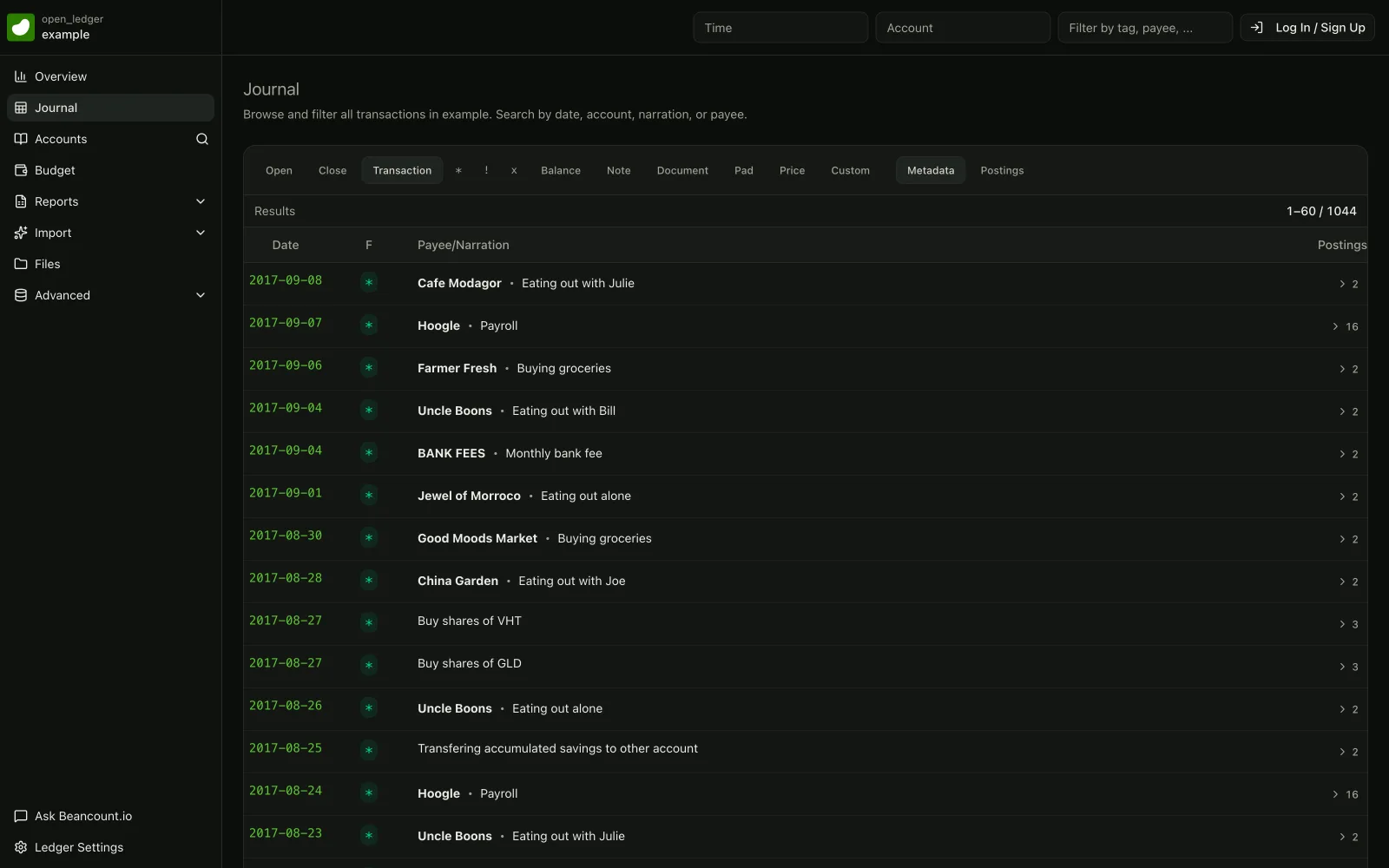
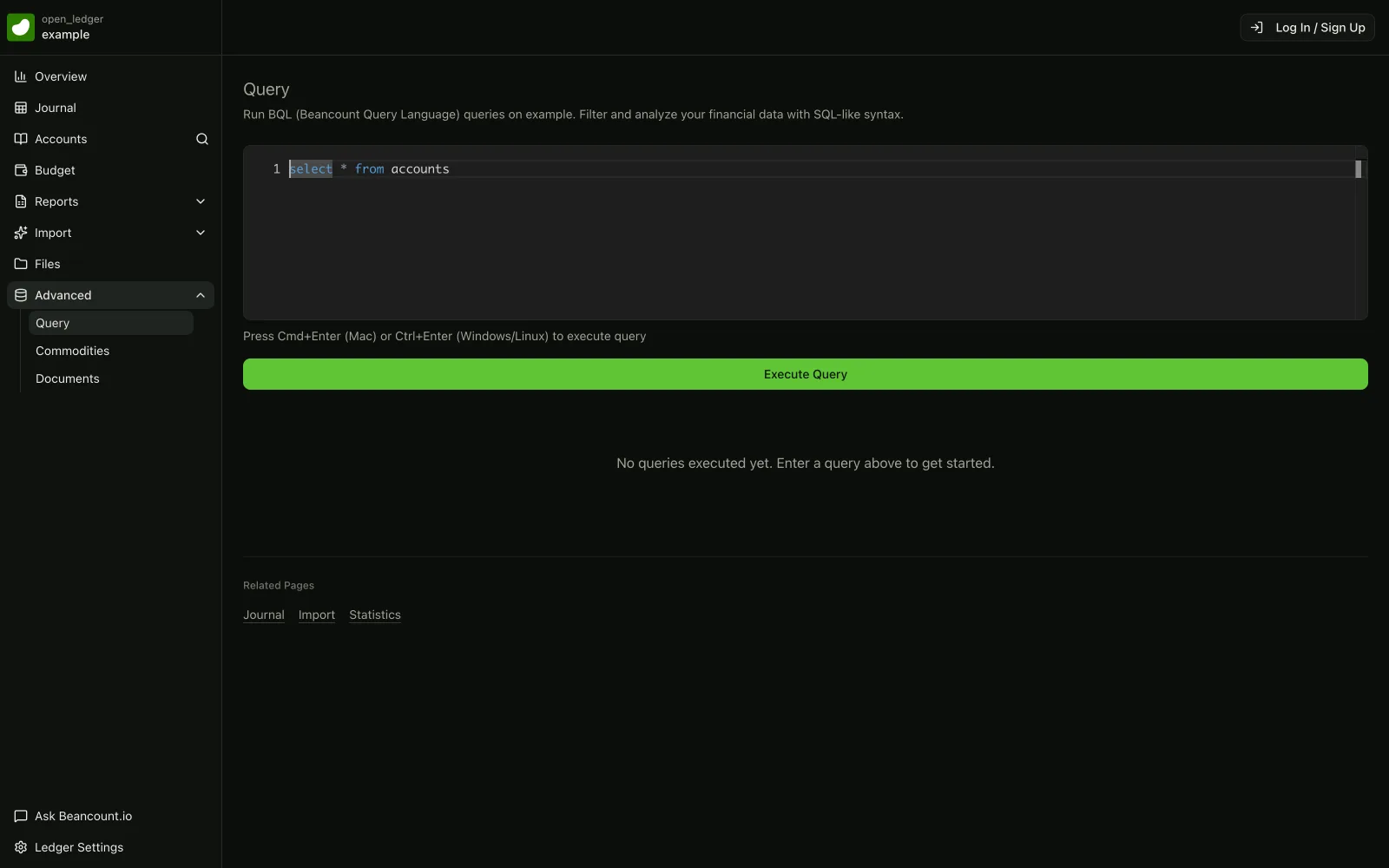
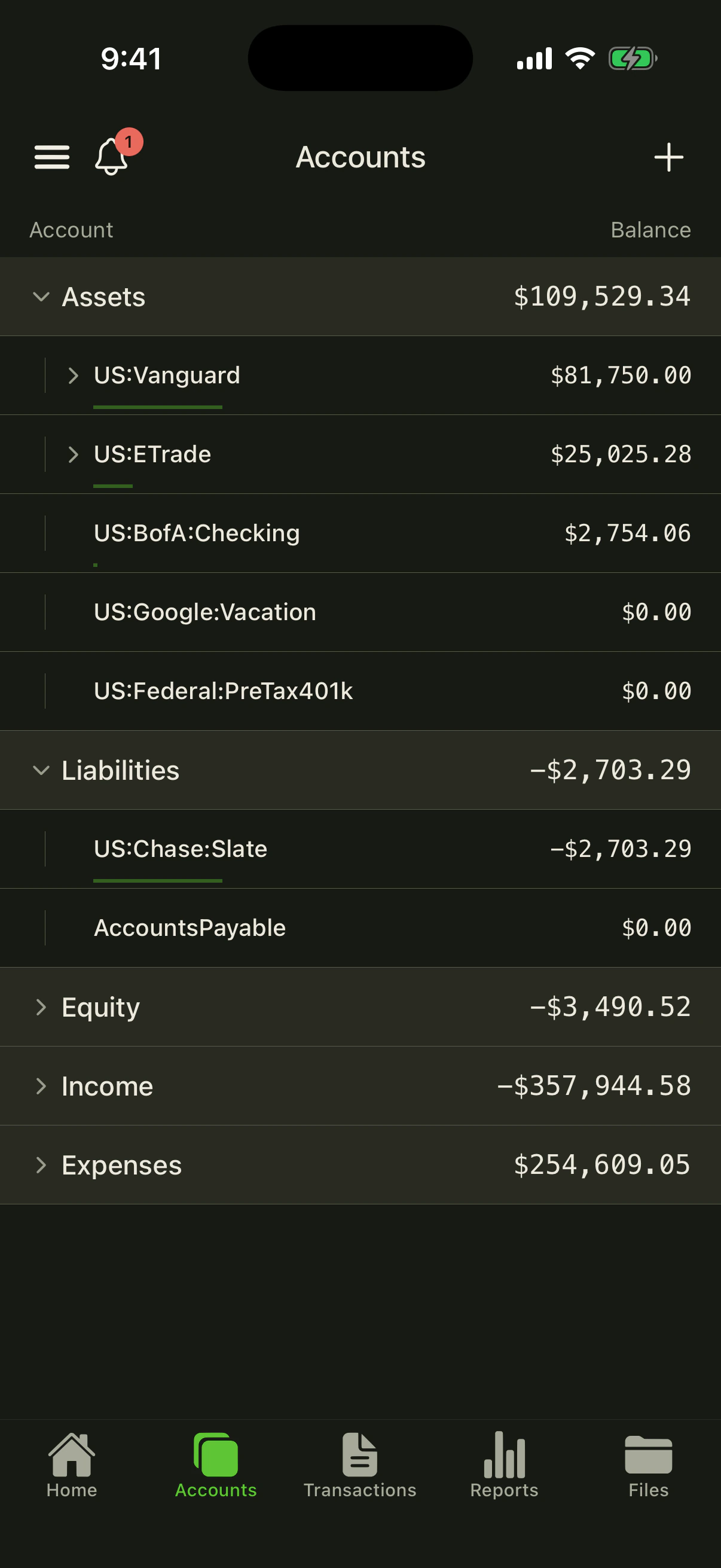
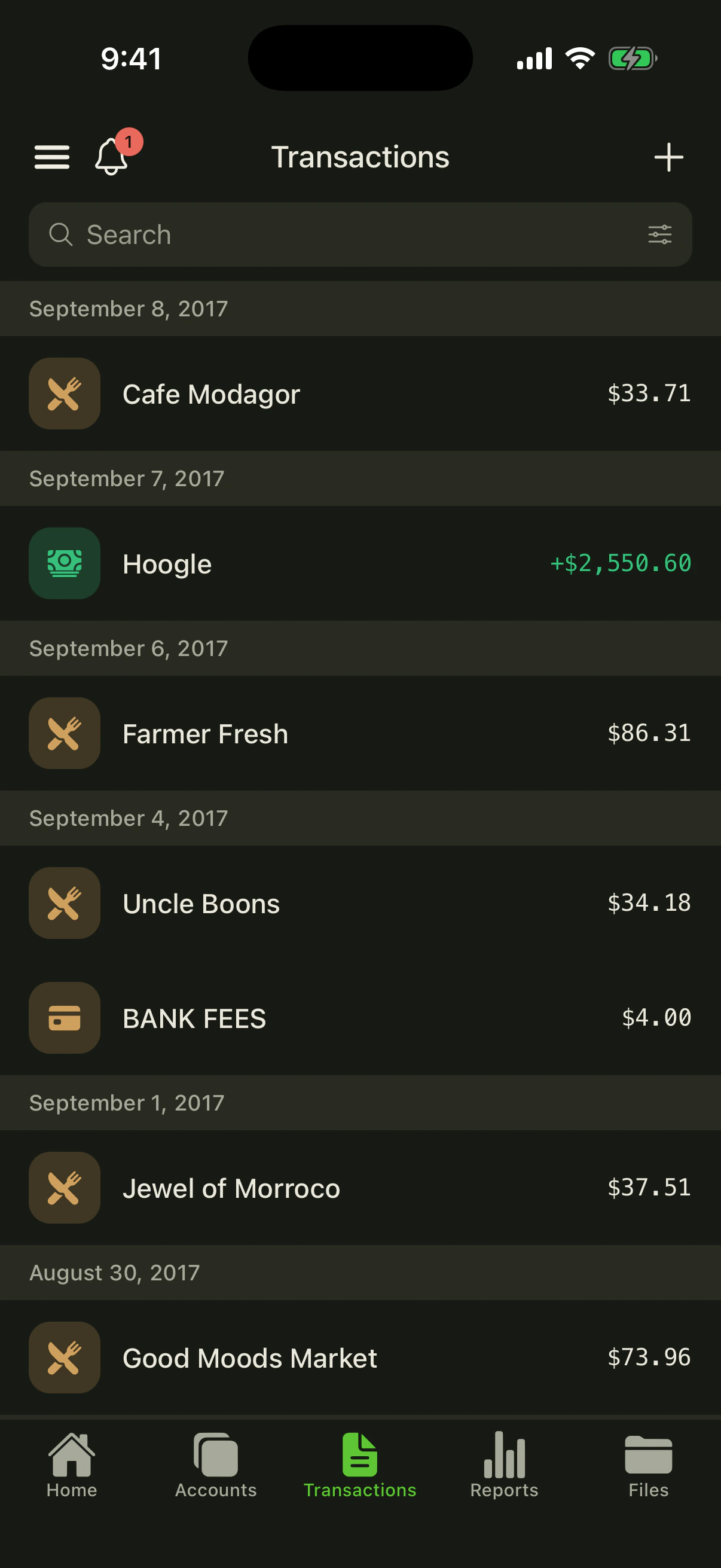
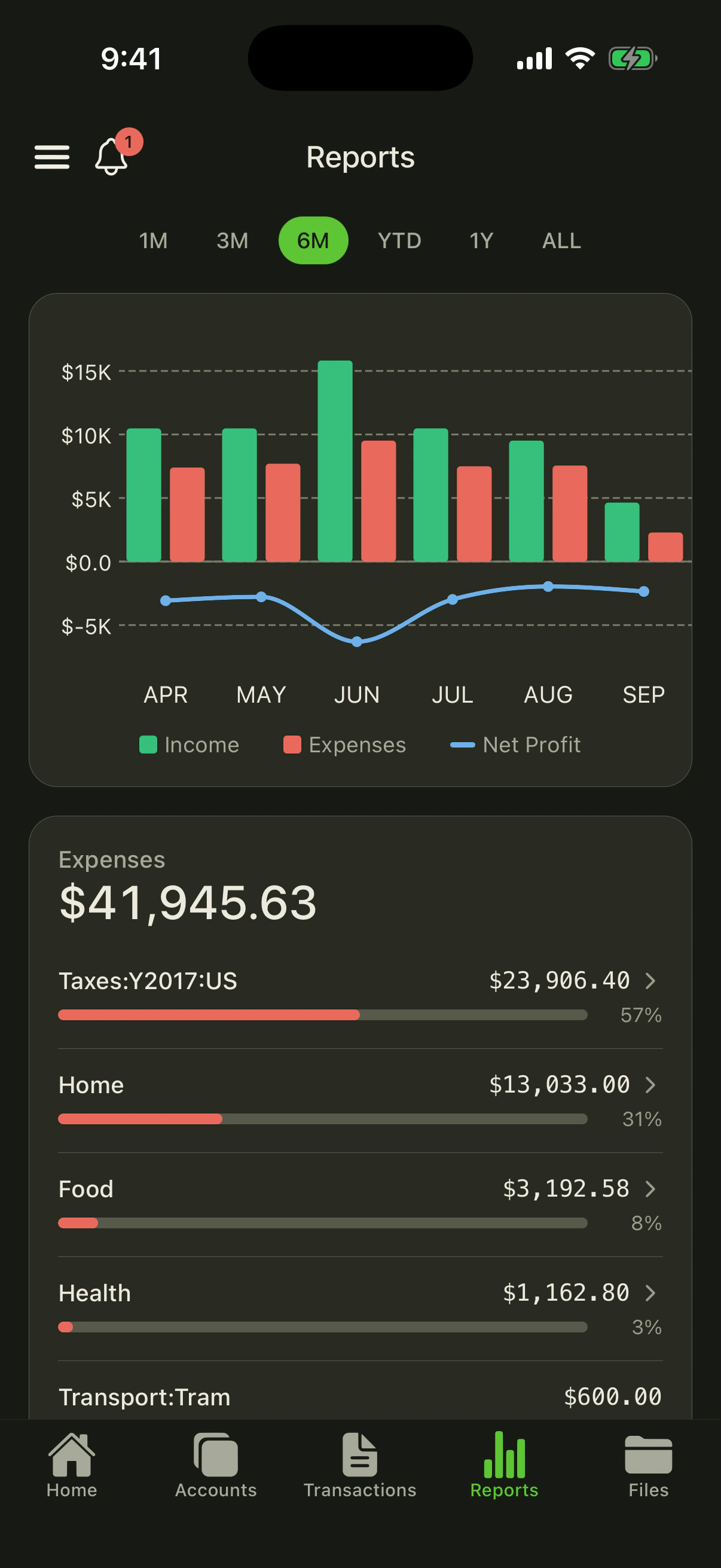
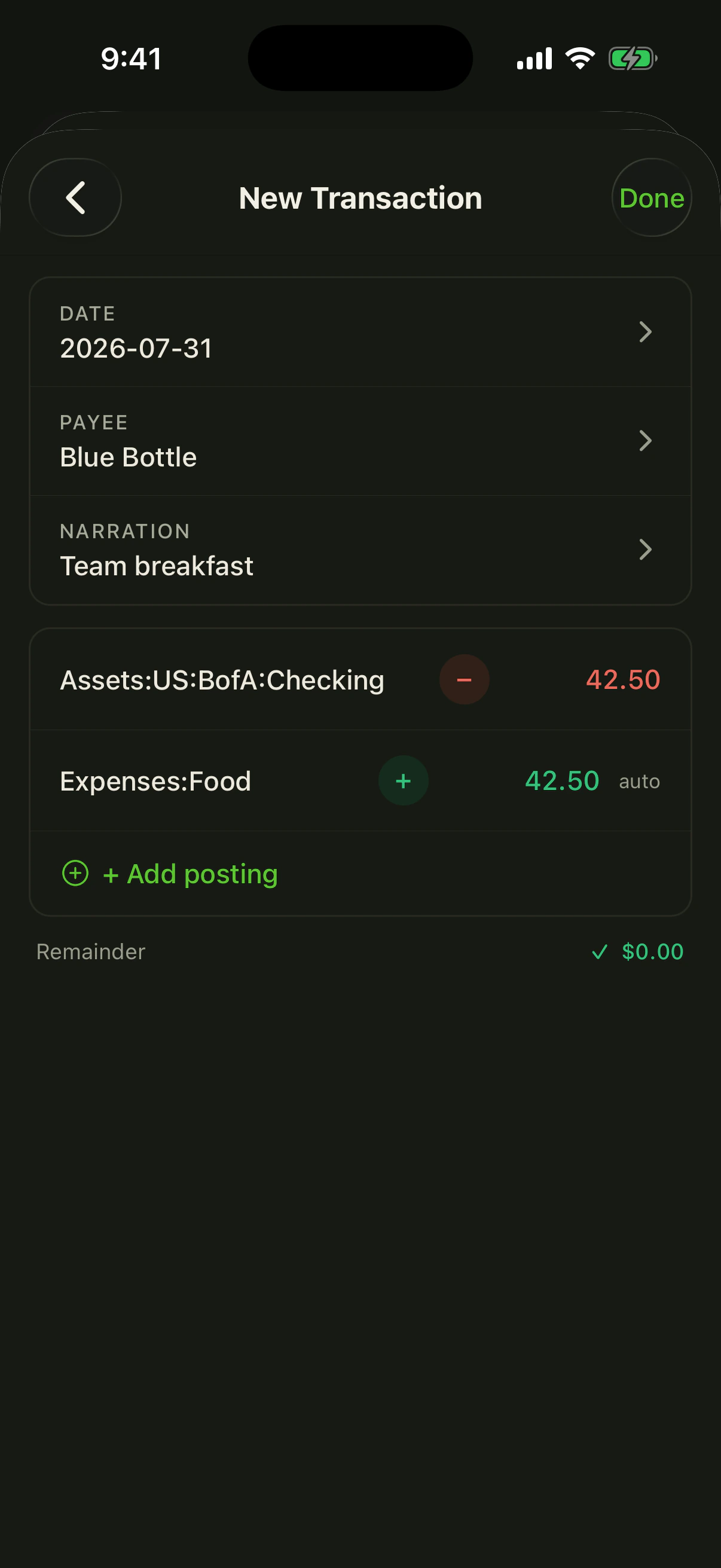
Web dashboards, BQL queries, and native mobile apps — one plain-text ledger behind all of it.
Open full-size image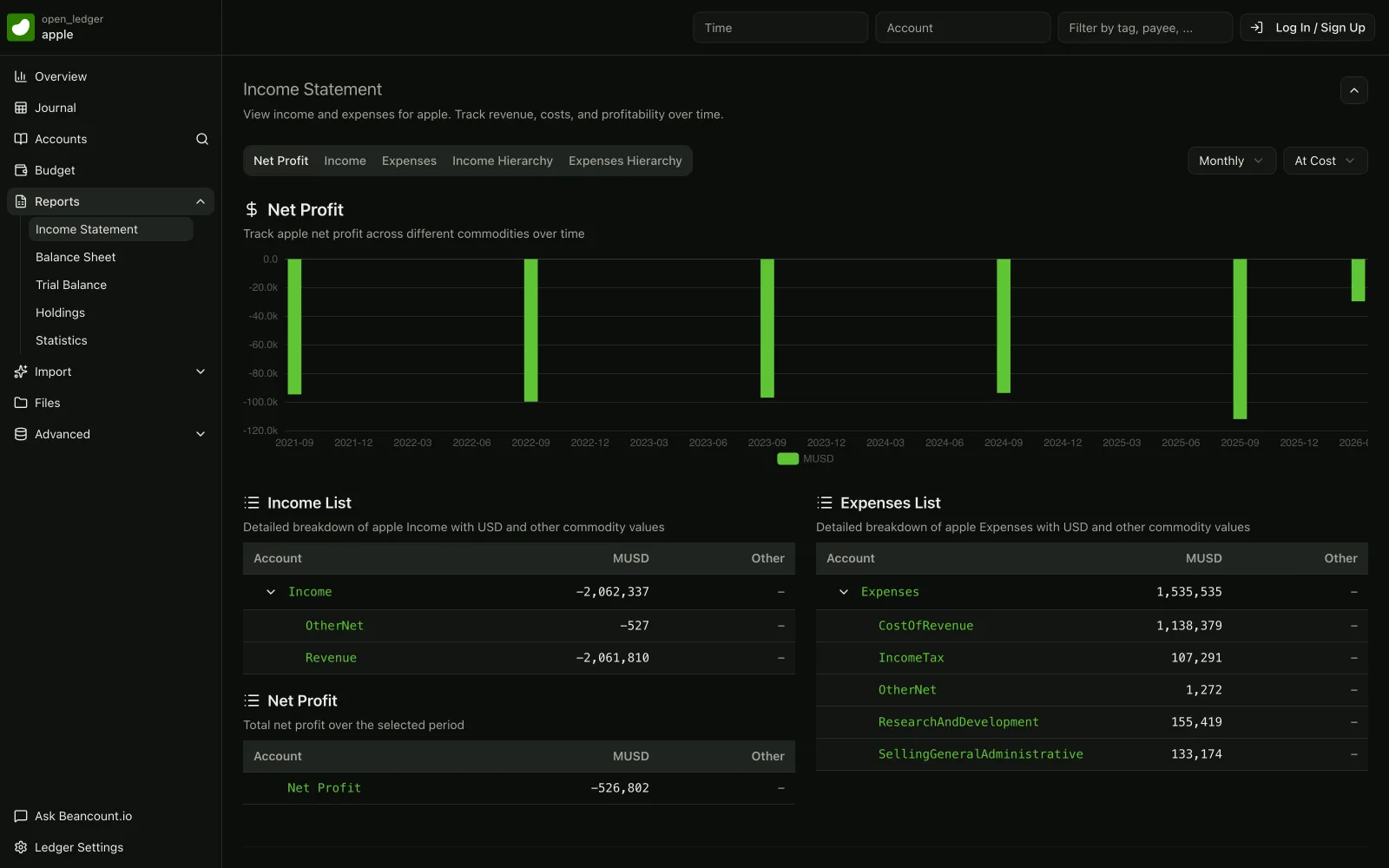 Open full-size image
 Open full-size image
 Open full-size imageOpen full-size image
 Open full-size image
 Open full-size image
 Open full-size image
 Open full-size image
 Open full-size image
Two local-first tools make this civilized: no export windows, no lock-in — your data is already on your disk.
Download the full budget zip (db.sqlite + metadata.json), or read everything with @actual-app/api; export account transactions as CSV.
Pick a cutover date and note each account's balance from your bank statements — the checkpoints your new ledger will be proven against.
Map on-budget accounts to Beancount asset and liability accounts, and Actual's categories to income and expense accounts.
Convert transactions into balanced double-entry postings with Smart Import, a month at a time, taking care that transfers don't double as income and expense.
Add balance assertions at statement dates, then upgrade off-budget balances to full lot-level investment tracking — the part Actual couldn't do.
Pick by the job, not the tool. Actual Budget is an envelope budgeting app: it excels at giving every dollar a job, taming variable spending, and replacing a YNAB subscription with something free and self-hosted. Beancount is a double-entry accounting system: it excels at building a complete, auditable record of your finances — investments with cost basis, multiple currencies, balances you can prove against statements. If your question is 'where should next month's money go?', choose Actual. If it's 'what is the exact, verifiable state of my finances?', choose Beancount.
Yes, genuinely. Actual Budget is MIT-licensed, community-maintained since James Long open-sourced it in April 2022, and free to self-host — its recommended one-click host, PikaPods, even donates 20% of hosting fees back to the project. Beancount and the Fava web interface are likewise free and open source, and your ledger is a plain-text file that never sits behind a paywall. beancount.io's optional paid plans cover hosted conveniences like bank sync and mobile apps, not the software or your data.
No, by design. Investments and mortgages live in off-budget accounts that track a balance you update by hand — no holdings, lots, or prices — and the official docs state Actual does not support multi-currency, with an experimental currencies feature still in development as of 2026. These are exactly Beancount's strengths: investments carry lots, cost basis, prices, and capital gains, and every currency, stock, fund, or crypto asset is a first-class commodity with real conversion accounting.
Yes, and it's a friendly migration as these things go. Actual keeps your data in a local SQLite file and exports the full budget as a zip you can re-import or read with the open @actual-app/api; transactions also come out as CSV. Map Actual's accounts to Beancount accounts, convert each transaction into a balanced double-entry posting, and add balance assertions at statement dates to verify the result. Your envelope category history won't carry over as budgets, but every transaction and balance can.
Yes — both are local-first, which is why they attract the same privacy-minded audience. Actual's primary database is on your device; a self-hosted sync server (Docker) adds multi-device sync with optional end-to-end encryption. Beancount's ledger is plain-text files on your disk, synced however you sync files — Git being the natural choice. The difference is the format: Actual's truth lives in SQLite read through the app or its API, Beancount's in text any editor can open, diff, and audit.
Start free in minutes — no credit card, no lock-in, and your plain-text ledger is always yours to keep.